Call Us Today! (703) 589-3192

Bar & Nightclub Kitchen Exhaust Cleaning: Grease Risks in High-Volume Fryer Kitchens
Published on March 13, 2026
Nightclub kitchens face extreme grease buildup from high-volume frying. We explore the essential role of specialized kitchen exhaust cleaning in preventing fires and maintaining late-night operations.

Back To Blog
Intro
In the world of nightlife, the kitchen is often an unsung hero, pumping out high volumes of appetizers and fried snacks long after traditional restaurants have closed. However, this high-output environment creates a significant hidden danger: rapid grease accumulation. Bar kitchen hood cleaning is a critical safety requirement, as the combination of high-heat fryers and alcohol-rich environments makes these venues particularly susceptible to flash fires. Understanding the specific risks associated with nightclub kitchen exhaust cleaning is essential for protecting your staff, your patrons, and your liquor license.
The Volatility of High-Volume Fryer Kitchens
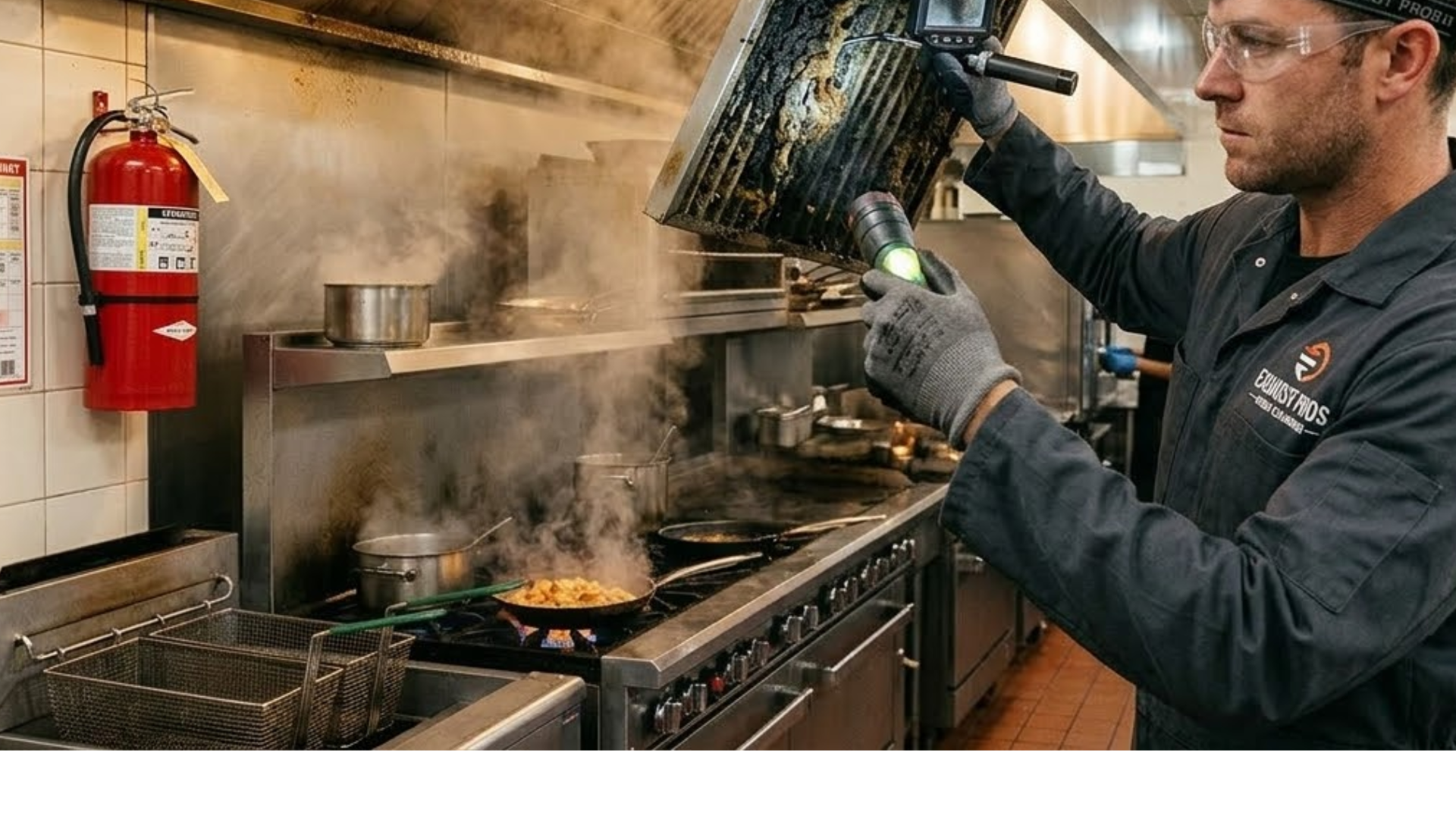
Unlike standard cafes, bars and nightclubs often rely heavily on deep fryers, which release a fine, atomized mist of grease into the ventilation system. This grease is highly flammable and, if not professionally removed, coats the interior of the ductwork in a thick, fuel-like layer. Because nightclubs are often crowded and feature dim lighting or pyrotechnics, the margin for error in fire safety is razor-thin. Regular cleaning ensures that the exhaust system can effectively pull heat and smoke out of the building, preventing the “fuel-heavy” air that can turn a small stovetop flare-up into a full-scale building fire.
Navigating Compact and Complex Layouts
Nightclub kitchens are frequently squeezed into small footprints to maximize floor space for guests. This often leads to complex ductwork with sharp turns and limited access points, where grease tends to pool in “dead zones.” Professional nightclub kitchen exhaust cleaning requires a technician who knows how to locate these hidden areas that standard cleaning might miss. Furthermore, these kitchens often operate during non-traditional hours, meaning maintenance must be scheduled in the early morning or afternoon to ensure the system is completely cooled and ready for the next high-traffic shift.
High-Value Industry Targeting: New Commercial Kitchen Sectors
By applying the principles of High-Value Industry Targeting, specialized cleaning services are identifying bars and nightclubs as a critical growth sector. These venues bring in new commercial kitchen sectors because they require a higher frequency of service often monthly or bi-monthly due to the sheer volume of grease produced. For facility managers, targeting these high-use environments means shifting from “reactive” cleaning to a scheduled maintenance model. This proactive approach not only satisfies insurance requirements but also prevents the costly downtime that occurs when a system fails during a peak Friday night rush.
Conclusion
For bar and nightclub owners, the kitchen exhaust system is “out of sight, out of mind” until it becomes a hazard. Prioritizing professional bar kitchen hood cleaning is an investment in the longevity of the business. By maintaining a clean, efficient exhaust system, you ensure a safer environment for your guests and a cooler, more breathable workspace for your kitchen staff. In the high-stakes world of nightlife, fire prevention isn’t just a code requirement, it’s a fundamental part of the guest experience.
Prioritizing professional bar kitchen hood cleaning ensures a cooler, more breathable workspace for your staff and a safer environment for your guests in the high-stakes world of nightlife. CLICK HERE
FAQ
How often do bars with heavy frying need their hoods cleaned? Due to the constant use of deep fryers, most high-volume bars and nightclubs require cleaning at least once every three months. However, if your kitchen operates at near-constant capacity during late-night hours, monthly inspections are highly recommended to prevent grease overflow.
Does a clean exhaust system help with kitchen temperature? Yes. When a kitchen exhaust system is clogged with grease, the fan has to work harder and moves less air. Professional cleaning restores proper airflow, which helps pull hot air out of the kitchen more efficiently, resulting in a significantly cooler working environment for your cooks.
Recent Posts

Jun. 12, 2026
Grease Dripping from Your Hood? Here’s What It Means
Jun. 05, 2026
Why Your Commercial Kitchen Still Smells After Cleaning

May. 29, 2026
Why Steakhouse Kitchens Need More Frequent Cleaning: Managing High-Fat Effluent

May. 22, 2026
Risk Kitchen Hood Filters and Charbroiler Exhaust: Maintenance vs. Replacement
May. 15, 2026