Call Us Today! (703) 589-3192

Commercial Kitchen Fire Prevention: The Role of Professional Hood Cleaning
Published on July 10, 2026
Professional hood cleaning is your kitchen’s best defense against fire. We explore how removing hidden grease fuel sources protects your staff, property, and business.
Back To Blog
Intro
In a fast-paced commercial kitchen, fire prevention is often the silent partner in daily operations. While fire suppression systems are designed to react to an emergency, professional hood cleaning is the proactive force that ensures those emergencies never happen in the first place. The role of a certified cleaning service goes far beyond aesthetics; it is a specialized technical process that removes the primary fuel source for kitchen fires—grease—before it can reach a flashpoint. In an industry where one small flare-up can lead to total property loss, professional maintenance is the foundation of a resilient business.
Removing the Fuel Source: Beyond the Surface
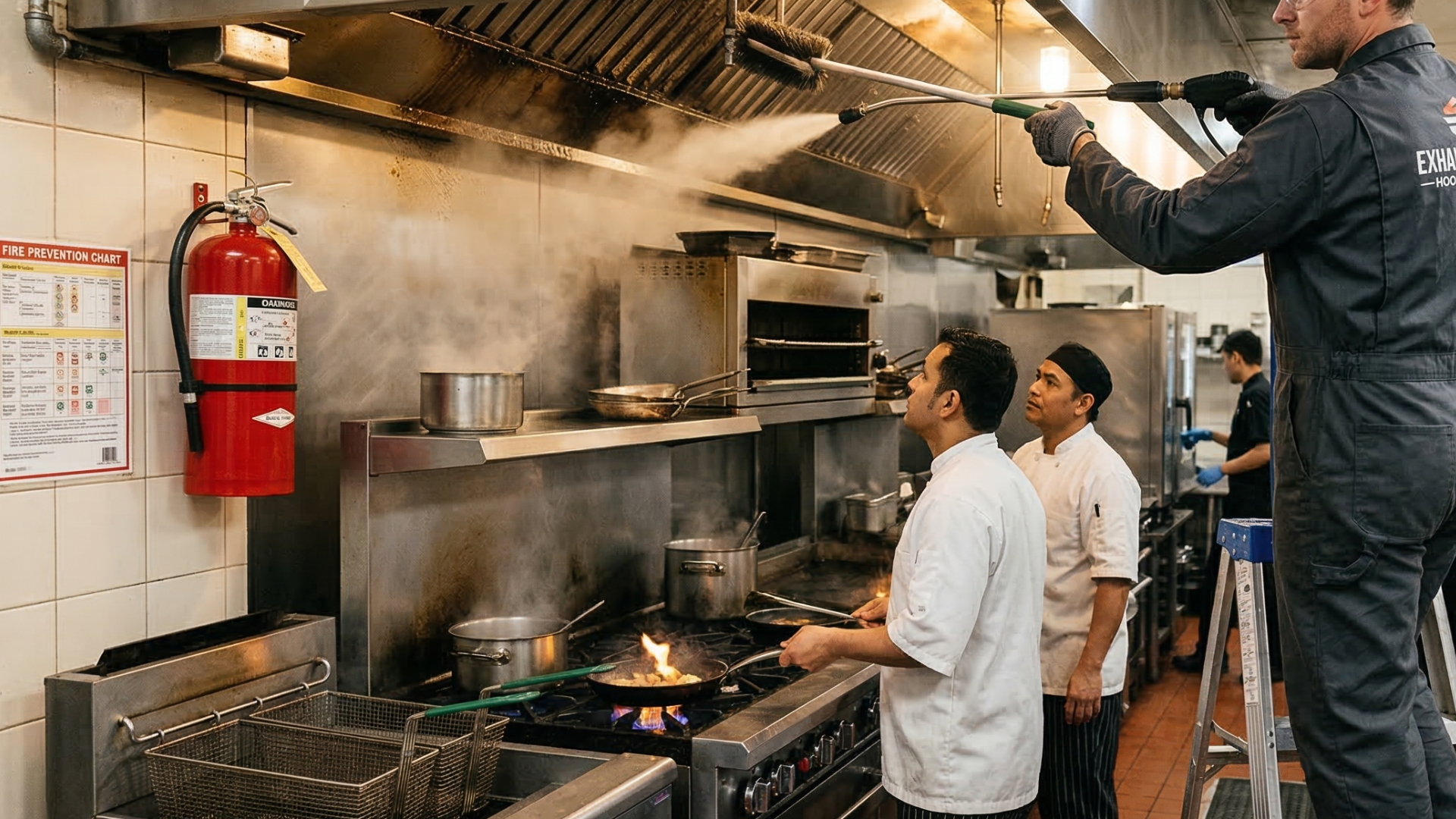
The most critical role of professional cleaning is the total removal of combustible contaminants from areas your staff simply cannot reach. While daily wiping of the hood exterior is good practice, it does nothing to address the heavy grease loading inside the plenum and the primary ductwork. Professional technicians use high-pressure hot water, industrial-strength degreasers, and mechanical scraping to strip every component back to “bare metal,” as mandated by NFPA 96. This thoroughness eliminates the “fuel chain” that allows fire to travel from the cooking line, through the walls, and onto the roof. By keeping the system grease-free, you are effectively removing the fuel that a fire needs to grow and spread.
Ensuring System Functionality and Efficiency
Professional hood cleaning also plays a vital role in the mechanical health of your fire prevention system. A grease-clogged exhaust fan doesn’t just pull less air; it runs hotter and is more prone to electrical shorts and motor failure, both of which are common ignition sources. Furthermore, professional cleaners inspect the integrity of your ductwork, checking for leaks or “grease weeping” at the joints that could allow fire to escape the duct. By maintaining proper airflow and verifying the structural health of the ventilation system, professional services ensure that your primary defense against smoke and heat—your exhaust system—is always operating at peak safety levels.
High-Value Industry Targeting: New Commercial Kitchen Sectors
Through the strategic application of High-Value Industry Targeting, facility directors in high-stakes environments—such as international airports, government agencies, and pharmaceutical cafeterias—are partnering with fire safety experts rather than general cleaners. These organizations bring in new commercial kitchen sectors that view exhaust cleaning as a critical “Zero-Failure” infrastructure requirement. By targeting vendors who provide NFPA 96 compliance reporting and before-and-after photo documentation, these high-value clients ensure their kitchens meet the rigorous 2026 safety standards required by both fire marshals and insurance underwriters. This professional-grade focus on safety is the hallmark of modern, high-value kitchen management.
Conclusion
Commercial kitchen fire prevention is a multi-layered discipline, and professional hood cleaning is its most important layer. By eliminating hidden fuel sources and ensuring the mechanical efficiency of your exhaust system, you protect your staff, your customers, and your bottom line. Investing in a certified, professional cleaning service is not just about passing an inspection; it is about building a culture of safety that allows you to focus on your culinary craft with total peace of mind. In a high-volume kitchen, the best fire is the one that never has the fuel to start.
To build a true culture of safety and ensure your high-volume kitchen never provides the fuel for a fire to start, you must prioritize professional, certified exhaust system maintenance. CLICK HERE
FAQ
Is professional cleaning still necessary if we have a high-end fire suppression system?
Yes. A fire suppression system is a reactive tool designed to put out a fire that has already started. Professional hood cleaning is a proactive tool designed to remove the grease that fuels the fire. If your ducts are heavily laden with grease, a suppression system may not be able to fully extinguish the fire once it enters the ventilation network.
How do I know if my cleaning provider is truly “professional”?
A professional service provider will always be certified by a recognized body like IKECA or PHIL. They will provide a detailed service report, including before-and-after photos of the entire system (including the rooftop fan and vertical ducts), and place a dated, signed service tag on your hood that is visible to fire inspectors.
Recent Posts

Aug. 28, 2026
Nova Pro: Expert Hood & Exhaust Services

Aug. 21, 2026
Nova Commercial Hoods: Keeping Your Kitchen Code-Compliant

Aug. 14, 2026
Superior Airflow, Zero Grease: Powered by Nova

Aug. 07, 2026
Nova Hood Cleaning: Where Safety Meets Sparkle

Jul. 31, 2026