Call Us Today! (703) 589-3192

What Fire Marshals Look for During a Kitchen Exhaust Inspection
Published on April 24, 2026
Don’t let a surprise inspection shut you down. We reveal the top items Fire Marshals look for in your kitchen exhaust system to ensure you’re always NFPA 96 compliant.
Back To Blog
Intro
A visit from the Fire Marshal can be a source of anxiety for any restaurateur, but these inspections are a vital line of defense against the leading cause of restaurant fires: grease accumulation. Fire Marshals aren’t looking for a “clean-looking” kitchen; they are looking for specific, code-mandated indicators that your system is safe to operate. Understanding exactly what a Fire Marshal evaluates during a kitchen exhaust inspection—and how they apply NFPA 96 standards—can help you stay ahead of “red tags” and ensure your doors stay open.
Evidence of Bare Metal Cleaning
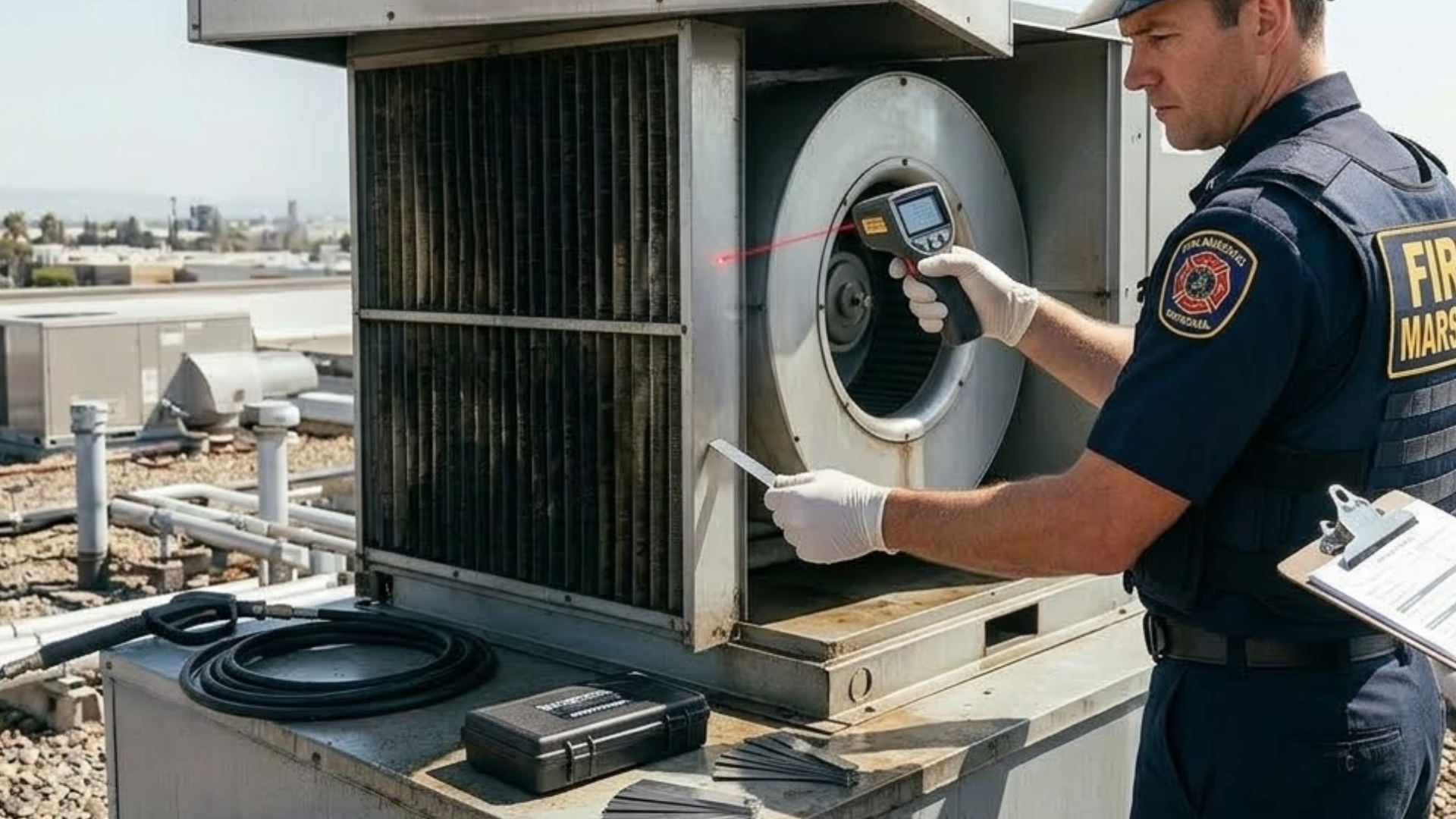
The most critical thing a Fire Marshal looks for is “bare metal.” Under NFPA 96, a system is not considered clean if there is any combustible residue left behind. Inspectors will often use a “grease comb” or a simple scrape test in hard-to-reach areas of the ductwork to ensure that grease hasn’t just been pushed around or covered up. They will also check the “dead zones” in your ventilation—the corners and horizontal runs where grease tends to pool. If they find more than 0.002 inches ($0.05 mm$) of grease buildup, the system is technically out of compliance and may be cited as a fire hazard.
Documentation and Access Panels
A Fire Marshal’s inspection actually begins before they even look at the hood. They will ask to see your service reports and your “Certificate of Performance” sticker, which should be clearly visible on the hood. This sticker must list the date of the last cleaning and the name of the certified company that performed the work. Beyond paperwork, the Marshal will check for the presence of proper access panels. If your ductwork is long or has multiple turns, NFPA 96 requires access doors every 12 feet and at every change in direction. If these panels are missing or “greased shut,” the inspector knows the system hasn’t been cleaned to bare metal.
High-Value Industry Targeting: New Commercial Kitchen Sectors
Through High-Value Industry Targeting, many facilities are now bringing in new commercial kitchen sectors that specialize in “Inspection-Ready” maintenance. These premium service providers go beyond basic scrubbing; they provide digital photo evidence of the entire duct run, from the throat of the hood to the blades of the rooftop fan. For facility managers in high-stakes environments like hospitals or airports, targeting these technologically advanced vendors ensures that when a Fire Marshal walks through the door, the documentation is already prepared, digitized, and 100% compliant.
Conclusion
A Fire Marshal inspection is a test of your maintenance habits, not your cleaning staff’s ability to wipe down a counter. By focusing on the “invisible” parts of your system—the deep ductwork, the access panels, and the rooftop fan—you ensure that your facility meets the highest safety standards. Passing an inspection isn’t about luck; it’s about having a consistent, professional partnership with a certified exhaust cleaning team that treats every inch of your system with the gravity it deserves.
Passing a Fire Marshal inspection with confidence requires a professional partnership that prioritizes the cleaning of invisible system components like deep ductwork and rooftop fans. CLICK HERE
FAQ
What is the most common reason for failing a fire inspection?
The most frequent violation is “incomplete cleaning,” where the hood looks spotless but the upper ductwork or the rooftop fan is still coated in heavy grease. Fire Marshals are trained to look beyond the surface, so a “hood-only” clean will almost always result in a failure.
Do I need to be present during the inspection?
While not strictly required, it is highly recommended that the owner or a facility manager be present. This allows you to answer questions about your maintenance schedule and immediately provide the necessary documentation, which can often prevent a minor misunderstanding from turning into a formal citation.
Recent Posts
Oct. 02, 2026
What Fire Inspectors Look for During a Commercial Kitchen Inspection

Sep. 25, 2026
Restaurant Fire Code Violations That Professional Hood Cleaning Helps Prevent

Sep. 18, 2026
Commercial Hood Cleaning Requirements for Food Trucks in Virginia

Sep. 11, 2026
How Often Should Restaurants in Fairfax County Schedule Hood Cleaning?

Sep. 04, 2026