Call Us Today! (703) 589-3192

Why Your Commercial Kitchen Still Smells After Cleaning
Published on June 5, 2026
If your kitchen still smells like old grease after a cleaning, the job isn’t finished. We reveal the hidden “dead zones” where rancid oil hides and how to fix it for good.
Back To Blog
Intro
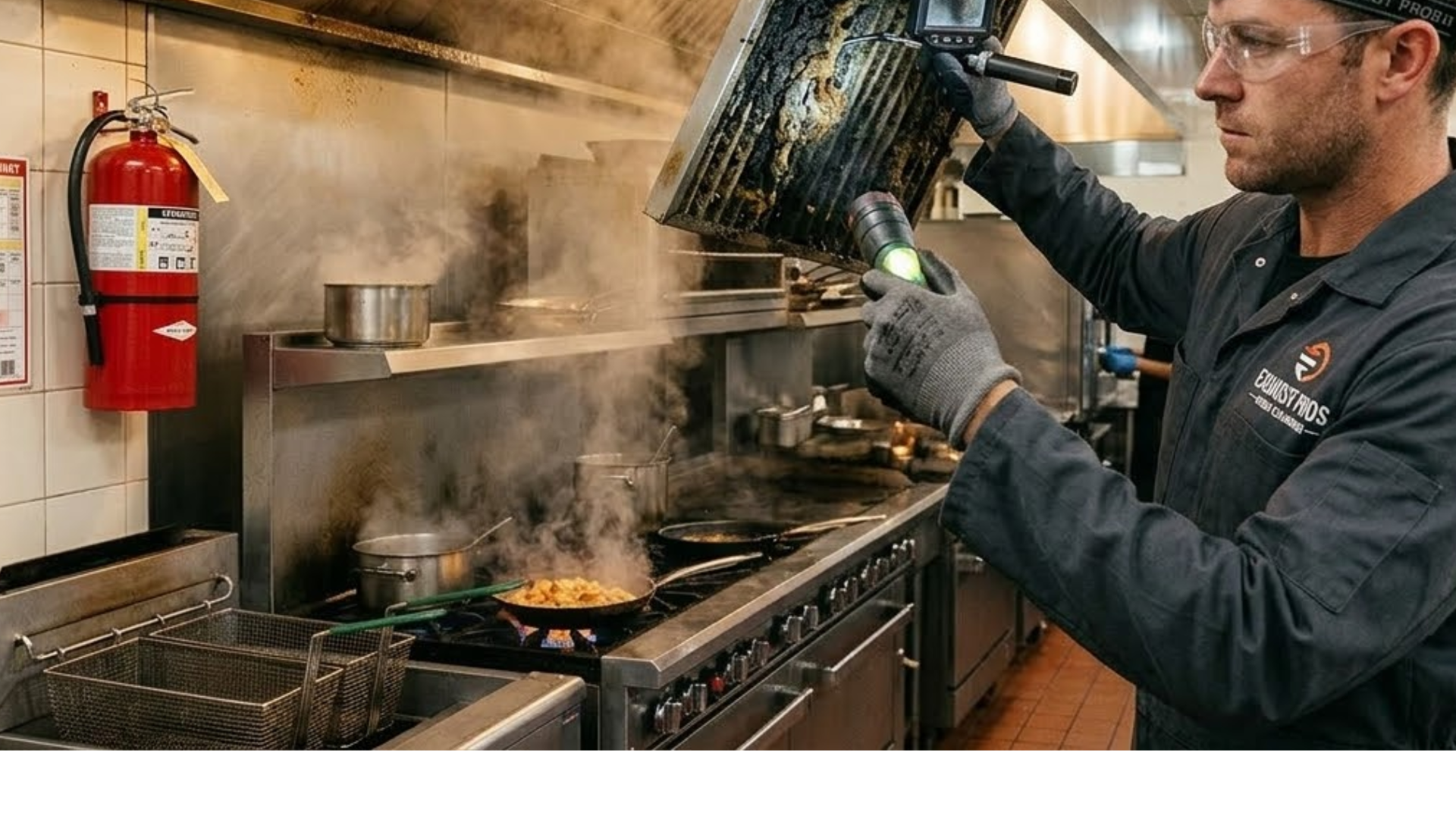
There is nothing more frustrating for a restaurant owner than walking into the kitchen the morning after a professional service only to be greeted by the same heavy, rancid odor. You paid for a cleaning, the stainless steel is shining, and the filters look bright—so why does it still smell? The truth is that “clean” is often only skin-deep. If your commercial kitchen still smells after cleaning, it is a massive red flag that the most critical, grease-laden areas of your ventilation system were likely skipped or ignored.
The Culprits: Hidden Horizontal Ducts and “Dead Zones”
The most common cause of persistent odors is stagnant grease trapped in the horizontal duct runs. Many “budget” cleaning companies focus only on the vertical drop and the hood itself because they are easiest to reach. However, grease vapors that don’t make it all the way to the roof often liquefy and pool in the flat sections of your ductwork. Over time, this grease goes rancid, creating a sour, pungent smell that the exhaust fan then pulls back into the kitchen environment. If your service provider didn’t open every access panel to scrape these “dead zones” to bare metal, the source of the smell remains untouched.
Rooftop Fan Neglect and the “Backdraft” Effect
Another frequent offender is the rooftop exhaust fan. If the fan bowl and the underside of the blades aren’t degreased, the sun’s heat on the roof cooks the trapped oil, intensifying the odor. When the system is turned off at night, a “backdraft” can occur, pushing that concentrated smell down the ductwork and into the kitchen. Furthermore, if you lack a proper grease containment system on the roof, the grease leaking onto your roofing membrane will rot and decay, creating a foul smell that can be pulled into the building’s fresh air intakes, circulating the scent of old fryer oil throughout the entire dining room.
High-Value Industry Targeting: New Commercial Kitchen Sectors
Through High-Value Industry Targeting, facility managers are now prioritizing “Odor-Elimination” as a key performance indicator. This strategic shift brings in new commercial kitchen sectors that focus on “Total System Hygiene” rather than just fire compliance. By targeting high-end hotels, open-concept restaurants, and luxury department store cafes, specialized cleaning firms provide a level of detail that includes deodorizing the ductwork and verifying the clean with internal cameras. For the business owner, this means partnering with a vendor who understands that a “smell-free” environment is just as important for the guest experience as it is for fire safety.
Conclusion
A persistent smell after a cleaning is more than just an annoyance; it is evidence of an incomplete job. Odors are caused by organic matter—usually rancid grease—and if the smell remains, the grease remains. To truly eliminate kitchen odors, you must ensure that your cleaning service covers the entire path from the hood to the rooftop fan. When every inch of the system is restored to bare metal, the smell disappears, the air quality improves, and your kitchen finally feels as clean as it looks.
To ensure your kitchen truly smells as clean as it looks, you must verify that your cleaning service restores the entire exhaust path to bare metal, eliminating the rancid grease that causes persistent odors. CLICK HERE
FAQ
Can a dirty grease trap cause smells that seem like they are coming from the hood?
Yes. While the exhaust system is a common culprit, a full-service check should also include your floor drains and grease traps. However, if the smell is “heavy” and metallic, it is almost certainly originating from rancid oil trapped in the ventilation ductwork.
Do “deodorizing sprays” help with kitchen smells?
Only temporarily. Using scent-masking sprays is like putting a bandage on a wound; it hides the symptom without fixing the cause. The only permanent solution for a smelly kitchen is the mechanical removal of the decomposing grease from the interior of the exhaust system.
Recent Posts
Oct. 16, 2026
How Dirty Hood Filters Increase Energy Costs in Commercial Kitchens

Oct. 09, 2026
Signs Your Restaurant Exhaust Fan Needs Professional Cleaning
Oct. 02, 2026
What Fire Inspectors Look for During a Commercial Kitchen Inspection

Sep. 25, 2026
Restaurant Fire Code Violations That Professional Hood Cleaning Helps Prevent

Sep. 18, 2026