Call Us Today! (703) 589-3192

Fairfax Hood Cleaning Checklist: What Owners Must Know
Published on November 14, 2025
Nova Commercial Hood Cleaning helps Fairfax restaurant owners stay safe and compliant with a complete hood cleaning checklist that covers everything inspectors look for.

Back To Blog
Intro
In Fairfax, Virginia, restaurant owners are expected to meet high standards of cleanliness, safety, and operational efficiency. One of the most essential—but often misunderstood—areas of commercial kitchen maintenance is hood cleaning. Whether you’re preparing for a health inspection, trying to avoid costly fines, or simply aiming to improve fire safety, a clear checklist can help you stay on track. At Nova Commercial Hood Cleaning, we work with Fairfax restaurant owners to ensure nothing is overlooked. Use this essential checklist to understand what you need to know, what inspectors look for, and how to keep your kitchen compliant and safe.
Know the Cleaning Frequency Requirements
The first item on any hood cleaning checklist is establishing how often your system should be cleaned. In Fairfax, commercial kitchens are subject to NFPA 96, the national standard for ventilation control and fire protection of commercial cooking operations. These standards are enforced by local fire marshals and health officials and are based on how frequently you cook and what kind of equipment you use.
High-volume kitchens such as fast food restaurants or 24/7 diners typically need hood cleaning every month. Medium-use kitchens like sit-down restaurants or pizzerias may need quarterly service. Low-use kitchens—like seasonal establishments or churches—might only require service once or twice a year. Not adhering to the appropriate schedule can result in failed inspections, fines, and increased fire risks.
Nova Commercial Hood Cleaning helps Fairfax owners determine the right frequency based on their cooking habits and building layout. Staying on schedule is the first step in maintaining a safe and inspection-ready kitchen.
Inspect the Hood Canopy and Filters
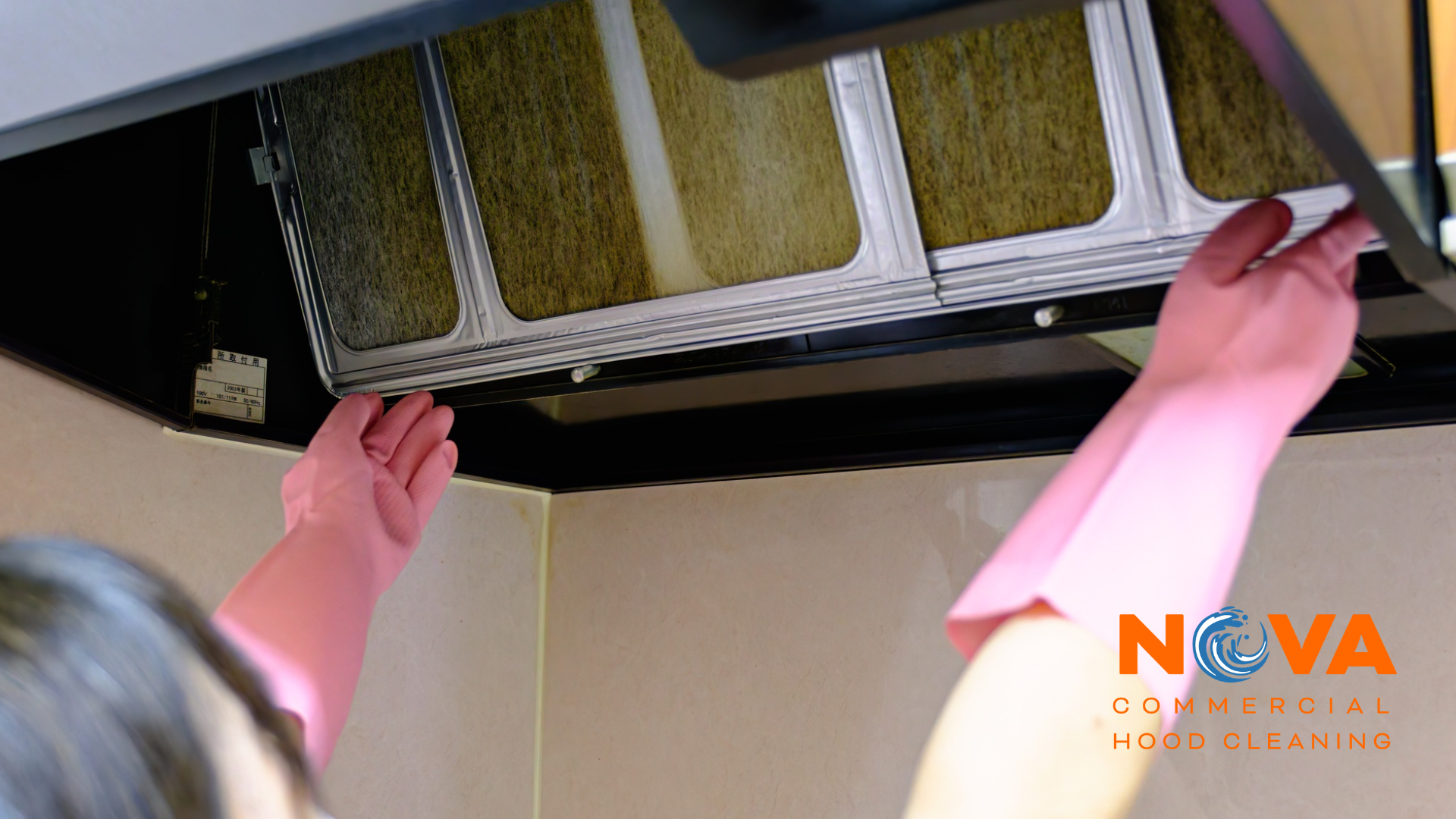
Grease and debris begin accumulating at the most visible level: the hood canopy and grease filters. These are the first line of defense in your ventilation system, and they’re often the first place inspectors will check. Grease buildup here not only signals poor maintenance but can also drip down onto cooking surfaces, posing contamination risks.
Your checklist should include weekly in-house inspection and wipe-down of the hood exterior. However, professional deep cleaning is required to remove embedded grease and reach hidden crevices. Filters should also be removed and cleaned regularly—or replaced if they show signs of damage or clogging.
Nova’s technicians disassemble and degrease filters during each scheduled service, ensuring proper airflow and reduced fire risk in the kitchen.
Check Inside the Ductwork and Exhaust Fan
Grease doesn’t stop at the hood. It travels through the ductwork and can accumulate on the walls, corners, and bends of your ventilation system. These areas are especially dangerous because they’re hidden from view and are difficult to access without professional tools and training.
Your Fairfax hood cleaning checklist must include full duct cleaning. This requires commercial-grade degreasers and specialized equipment to remove buildup in both horizontal and vertical runs. Grease trapped here is a major fire hazard and often the area most cited by fire marshals.
At the top of the system, the exhaust fan plays a crucial role in keeping air moving efficiently through your kitchen. Nova’s team inspects the fan for grease buildup, worn belts, improper installation, and vibration issues. We also verify that the fan is properly secured and accessible, as required by NFPA 96.
Document Each Cleaning for Inspection Readiness
Documentation is one of the most overlooked parts of hood maintenance, but it’s just as important as the cleaning itself. After each professional cleaning, Fairfax restaurant owners should receive a report that includes the service date, technician credentials, a description of the areas cleaned, and before-and-after photos. The report should also include recommendations for the next service and confirmation that the job met NFPA 96 compliance standards.
This documentation should be kept on hand and presented during health inspections, fire code reviews, or insurance audits. Nova provides every client with detailed digital reports after each visit, making it easy to prove compliance and maintain a clear maintenance history.
Schedule Cleaning During Downtime or Off-Hours
Your checklist should also include a plan for when cleanings will take place. Kitchen downtime is valuable, so scheduling hood cleaning during off-hours or on slower days minimizes disruption to service. Nova offers flexible scheduling—including evenings and weekends—to ensure your Fairfax restaurant stays open and productive without sacrificing safety or compliance.
Conclusion
Proper hood cleaning isn’t just a box to check off—it’s a critical part of running a safe, efficient, and legally compliant kitchen in Fairfax. By following this hood cleaning checklist and partnering with Nova Commercial Hood Cleaning, restaurant owners can prevent fire hazards, avoid costly violations, and extend the life of their equipment. From the canopy to the rooftop fan, every part of your exhaust system plays a role in keeping your staff and your investment safe. Stay proactive, stay compliant, and let Nova help you check every box with confidence. Local compliance is non-negotiable for business owners; for a full breakdown of the Fairfax hood cleaning checklist, CLICK HERE.
Frequently Asked Questions
What are the Fairfax County fire marshal’s requirements for hood cleaning?
The Fairfax County Fire Marshal adheres strictly to the NFPA 96 standards. This means your system must be cleaned to “bare metal,” and a certificate of performance must be clearly posted on the hood. Failure to provide documentation of a recent professional cleaning can lead to immediate fines.
How often do I need a hood inspection in Virginia?
While frequency depends on your cooking volume, the standard for most commercial kitchens is quarterly (every 3 months). However, if you use solid fuel (wood or charcoal), inspections must happen monthly. Low-volume kitchens, such as those in community centers or churches, may only require an annual inspection.
Does the checklist include the rooftop fan?
Absolutely. A common violation in Fairfax is a “hood-only” clean where the rooftop fan is ignored. To pass a local inspection, the fan must be cleaned, the grease containment box must be emptied, and a hinge kit must be installed to allow for proper duct access.
What happens if I fail a fire inspection in Fairfax?
Typically, you will be issued a “Notice of Violation” and given a specific timeframe to correct the issue—usually 15 to 30 days. If the grease buildup is deemed an “imminent hazard,” the marshal has the authority to shut down your gas lines and close your kitchen until a certified “bare metal” cleaning is completed.
Recent Posts
Oct. 16, 2026
How Dirty Hood Filters Increase Energy Costs in Commercial Kitchens

Oct. 09, 2026
Signs Your Restaurant Exhaust Fan Needs Professional Cleaning
Oct. 02, 2026
What Fire Inspectors Look for During a Commercial Kitchen Inspection

Sep. 25, 2026
Restaurant Fire Code Violations That Professional Hood Cleaning Helps Prevent

Sep. 18, 2026