Call Us Today! (703) 589-3192

Risk Kitchen Hood Filters and Charbroiler Exhaust: Maintenance vs. Replacement
Published on May 22, 2026
Back To Blog
Intro
The first line of defense in any commercial kitchen is the hood filter. Its job is to capture grease before it ever enters your ductwork. However, the type of cooking equipment you use—specifically high-heat units like charbroilers—dictates how hard those filters have to work. Understanding when to clean your kitchen hood filters and when to replace them is critical. For facilities running charbroiler exhaust systems, this maintenance isn’t just a weekly chore; it is a daily necessity to prevent the rapid accumulation of combustible creosote and heavy grease.
Kitchen Hood Filters: Knowing When to Clean vs. Replace
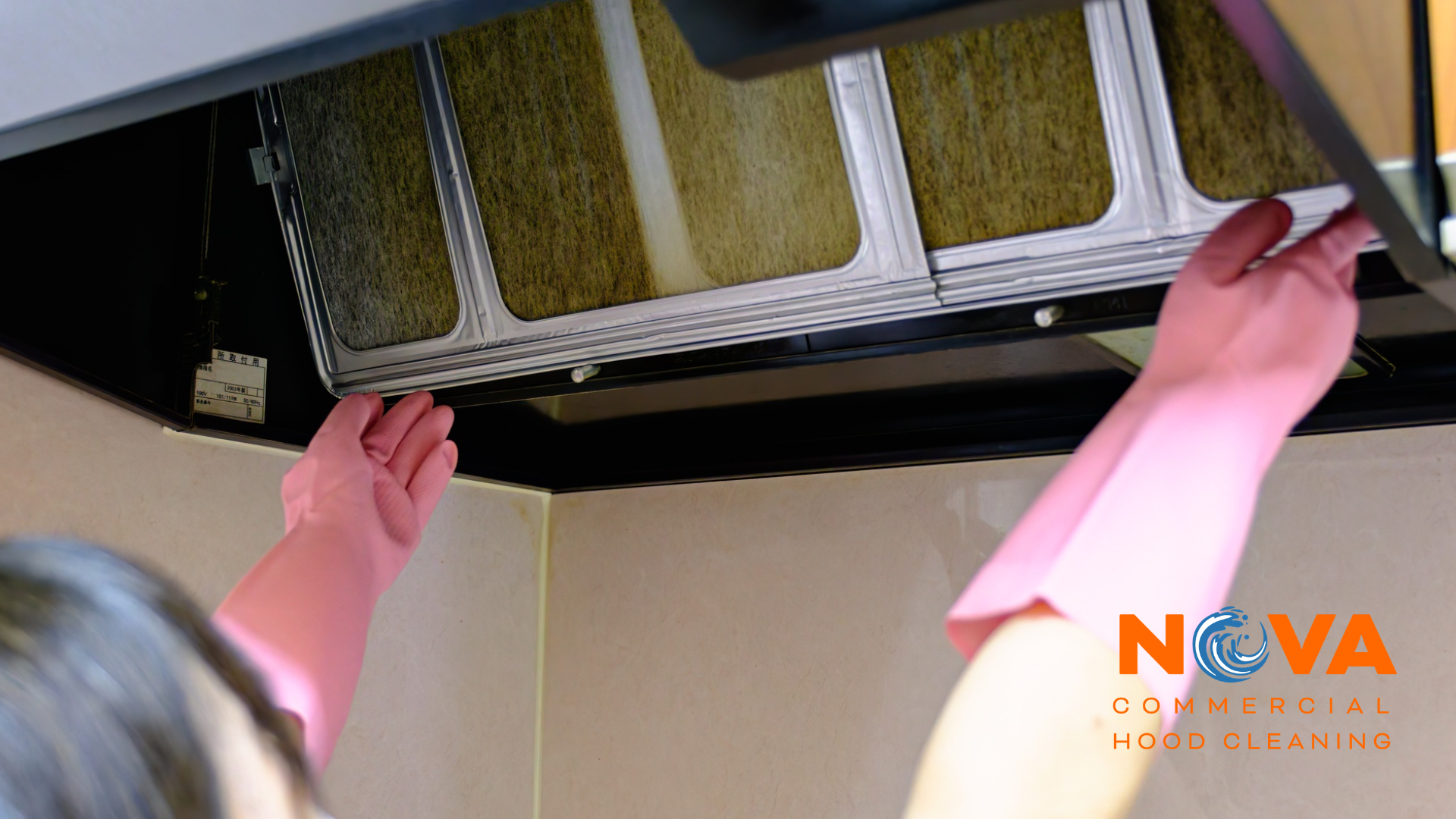
Most commercial kitchens use stainless steel baffle filters designed to be washed and reused. However, they are not indestructible. You should clean your filters daily to maintain proper airflow and fire protection. You know it is time to replace them when you see visible warping, holes in the baffles, or “pitting” in the metal. If a filter is bent, it creates a gap that allows raw flames and grease to bypass the filter and enter the ductwork directly. A damaged filter is no longer a fire barrier; it is a liability that can cause a small stovetop flare-up to become a building-wide emergency.
Charbroiler Exhaust Systems: The High-Risk Challenge
Charbroiler exhaust systems are among the most demanding in the industry. Because charbroilers use open flames and often cook high-fat proteins, they produce a unique combination of atomized grease and solid carbon (soot). This mixture creates a thick, sticky “sludge” that clogs filters much faster than standard range cooking. If you are operating a charbroiler, your filters may need to be swapped or cleaned mid-shift to prevent smoke from backing up into the kitchen. Furthermore, the high heat from charbroilers can actually “bake” grease onto the filters and ducts, making professional deep cleaning even more vital to prevent a grease fire.
High-Value Industry Targeting: New Commercial Kitchen Sectors
Through High-Value Industry Targeting, facility managers are now identifying high-grease sectors—like steakhouses and burger franchises—that require specialized filter exchange programs. These businesses bring in new commercial kitchen sectors by shifting away from “in-house” filter washing to professional exchange services. By targeting vendors who provide clean, UL-listed filters on a weekly rotation, high-volume restaurants ensure they are always compliant with NFPA 96. This strategy reduces the labor burden on kitchen staff and ensures that the most critical fire safety component is always in top condition.
Conclusion
Your exhaust system is only as good as the filters protecting it. While daily cleaning is the standard for most, those operating charbroiler exhaust systems must be twice as vigilant. Regularly inspecting your filters for wear and replacing them at the first sign of damage is a small price to pay for fire safety. By understanding the specific demands of your equipment and maintaining a strict filter-care schedule, you keep your kitchen cooler, your air cleaner, and your facility significantly safer.
Maintaining a strict filter-care schedule and replacing damaged filters immediately is essential for keeping your kitchen cooler and your facility significantly safer from fire risks. CLICK HERE
FAQ
Can I use aluminum filters for a charbroiler?
No. While aluminum filters are cheaper, they have a lower melting point and are not recommended for high-heat cooking like charbroiling. Stainless steel baffle filters are the industry standard for high-volume, high-heat kitchens because they are more durable and provide a better fire barrier.
How often should charbroiler ducts be professionally cleaned?
While many kitchens are on a quarterly schedule, charbroiler exhaust systems often require monthly professional cleaning. The high volume of solid fuel (if using wood or charcoal) or high-fat drippings creates a much faster buildup of flammable material than standard gas stoves.
Recent Posts
Oct. 16, 2026
How Dirty Hood Filters Increase Energy Costs in Commercial Kitchens

Oct. 09, 2026
Signs Your Restaurant Exhaust Fan Needs Professional Cleaning
Oct. 02, 2026
What Fire Inspectors Look for During a Commercial Kitchen Inspection

Sep. 25, 2026
Restaurant Fire Code Violations That Professional Hood Cleaning Helps Prevent

Sep. 18, 2026