Call Us Today! (703) 589-3192

Rooftop Exhaust Fan Cleaning: The Most Overlooked Part of Your Hood
Published on May 8, 2026
Is your kitchen exhaust system truly clean? We go beyond the hood to explain why rooftop exhaust fan cleaning is the “engine” of your safety system and how to prevent roof damage.
Back To Blog
Intro
Most restaurant owners believe that if the hood in their kitchen looks shiny and silver, their system is clean. However, the most critical component of your ventilation system is often “out of sight, out of mind”—perched high on the roof. Rooftop exhaust fan cleaning is frequently the most overlooked part of commercial kitchen maintenance, yet it is the engine that drives the entire system. A neglected fan doesn’t just perform poorly; it becomes a massive fire hazard and a leading cause of expensive structural damage to your roof.
The Mechanics of Grease Accumulation on the Roof
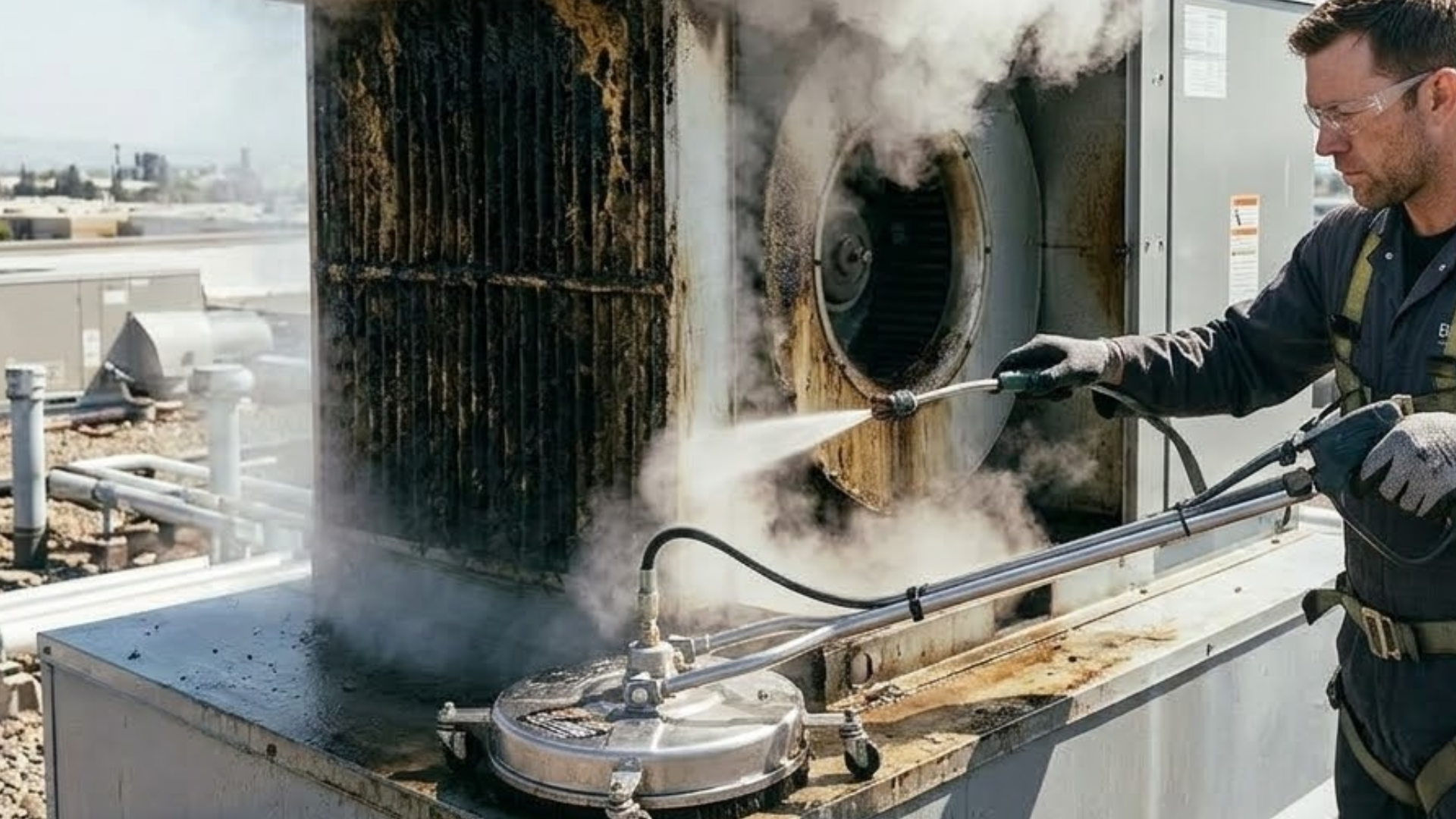
The rooftop fan is the final destination for grease-laden vapors before they exit your building. As these vapors cool, the grease liquifies and settles on the fan blades, the housing, and the surrounding roof curb. Over time, this buildup creates an unbalanced fan, leading to excessive vibration, bearing failure, and motor burnout. More dangerously, without a proper grease containment system, this flammable oil leaks onto the roofing membrane. Most commercial roofs are made of thermoplastic or rubber materials that chemically degrade when exposed to animal fats and vegetable oils, leading to “roof rot” and voiding your roof’s warranty.
Why “Hood-Only” Cleaning Is a Safety Illusion
Many low-cost cleaning services perform what the industry calls “hood-shining”—cleaning only the visible parts of the system to pass a visual inspection by the kitchen staff. However, if the rooftop fan isn’t stripped to bare metal, the fire risk remains. In the event of a stovetop flare-up, the exhaust fan acts as a vacuum, pulling flames into the ductwork. If the fan blades and housing are coated in grease, they act as a secondary fuel source, allowing the fire to exit the duct and ignite the roof of the building. Professional rooftop exhaust fan cleaning ensures the fan is tipped, the underside of the blades is scraped, and the bowl is degreased to ensure maximum airflow and safety.
High-Value Industry Targeting: New Commercial Kitchen Sectors
By utilizing High-Value Industry Targeting, facility managers are increasingly moving toward vendors who offer comprehensive “Roof-to-Hood” service packages. This strategic approach is especially common in new commercial kitchen sectors like large-scale food processing plants and cold-storage facilities that have heavy-duty ventilation needs. Targeting providers who specialize in rooftop maintenance—including the installation of hinge kits and grease “pigs” (absorbent booms)—allows business owners to extend the life of their equipment. This shift from simple cleaning to full-scale asset protection is what separates high-performing facilities from those constantly facing emergency repair costs.
Conclusion
A clean hood is only half the battle. To truly protect your building, your staff, and your equipment, rooftop exhaust fan cleaning must be a non-negotiable part of your maintenance routine. By ensuring your fan is balanced, degreased, and equipped with proper containment, you prevent fire spread and save thousands in potential roof repairs. Don’t let the “out of sight” nature of your rooftop fan lead to an “out of pocket” disaster—make sure your next service includes a trip to the roof.
To prevent “out of sight” rooftop grease accumulation from turning into an “out of pocket” disaster, you must ensure your maintenance routine includes professional fan degreasing and proper containment. CLICK HERE
FAQ
What is a fan hinge kit, and why is it required? NFPA 96 requires that all rooftop exhaust fans be equipped with a hinge kit. This allows the cleaning technician to tip the fan safely to clean the blades and the duct beneath it without stretching or breaking the electrical wiring. Without a hinge, fans are often dropped or damaged during service, leading to costly electrical shorts.
How can I tell if my rooftop fan is leaking grease? The most obvious sign is “staining” or dark pooling around the base of the fan on your roof. You may also notice a persistent “greasy” smell near the building’s exterior or see grease dripping down the side of the building. If you see these signs, your grease containment system has failed and needs immediate servicing to prevent roof damage.
Recent Posts

Sep. 25, 2026
Restaurant Fire Code Violations That Professional Hood Cleaning Helps Prevent

Sep. 18, 2026
Commercial Hood Cleaning Requirements for Food Trucks in Virginia

Sep. 11, 2026
How Often Should Restaurants in Fairfax County Schedule Hood Cleaning?

Sep. 04, 2026
Purely Nova: Elite Commercial Kitchen Cleaning

Aug. 28, 2026